For over a century, lighting has evolved, but no shift has been as revolutionary as the move to LED technology. What began as a scientific curiosity has become the dominant light source of the 21st century. As an industry leader, we explore the incredible journey of the Light Emitting Diode—where it came from, where it is now, and where it’s going next.
The Past: A Century of Humble Beginnings (1907 – 1990s)
The story of the LED is far longer than most people realize.
- The Discovery (1907): The concept of electroluminescence—the core principle of LEDs—was first observed by British engineer H.J. Round.
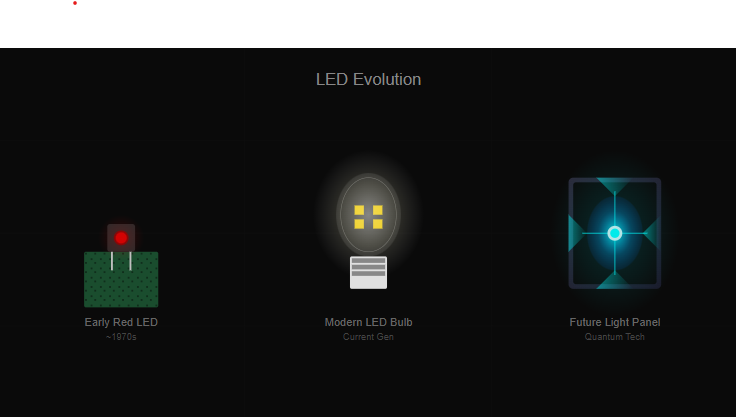
- The First Diode (1962): Nick Holonyak Jr. at General Electric created the first practical, visible-spectrum LED (which emitted red light). These early LEDs were dim, expensive (sometimes costing up to $200!), and used primarily as indicator lights in electronics like calculators and circuit boards.
- The Missing Link (1990s): The major barrier to white light was the Blue LED. The invention of the high-brightness blue LED by Isamu Akasaki, Hiroshi Amano, and Shuji Nakamura in the early 90s was the pivotal breakthrough. By combining red, green, and blue light, white light became possible, instantly opening the door to general illumination.
The Present: Global Dominance and Efficiency (2000s – Today)
Today, the LED has won the lighting race. Its success is driven by two powerful forces: efficiency and longevity.
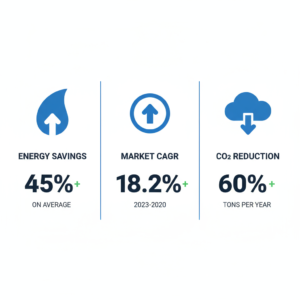
- The Efficiency Gap: Modern LEDs use up to 90% less energy than old incandescent bulbs and far outperform even CFLs. This is an indispensable feature for energy-conscious consumers and businesses worldwide.
- Lifespan & Maintenance: With operating lives that can exceed 50,000 hours, LEDs have drastically reduced maintenance costs, making them the standard for streetlights, offices, and industrial complexes.
- Integration: The current LED market is defined by Smart Lighting. Integration with IoT, Wi-Fi, and voice assistants allows users to control color temperature (tunable white), dimming, and scheduling, transforming light from a utility into a customized experience.
The Future: Intelligent, Invisible, and Therapeutic Lighting
The next phase of the LED revolution will be about using light for more than just illumination.
- Human-Centric Lighting (HCL): AI and smart controls will tailor light intensity and color spectrum throughout the day to match our natural circadian rhythms, improving mood, productivity, and sleep.
- Li-Fi (Light Fidelity): LEDs are capable of extremely fast flickering that is imperceptible to the human eye, enabling them to transmit data. Li-Fi promises super-fast wireless internet transmission using light waves.
- MicroLEDs and OLEDs: These next-generation technologies will create ultra-thin, flexible light sources. Think entire walls that function as displays or lighting fixtures, and transparent window panels that illuminate a room.
Specialized Applications: Look for continued growth in UV-C Disinfection (using germicidal light) and Horticulture/Agri-lighting (customized light spectrums to boost crop growth).